 V2K Migrate
Proxmox VE is now a migration destination, not a disk drop
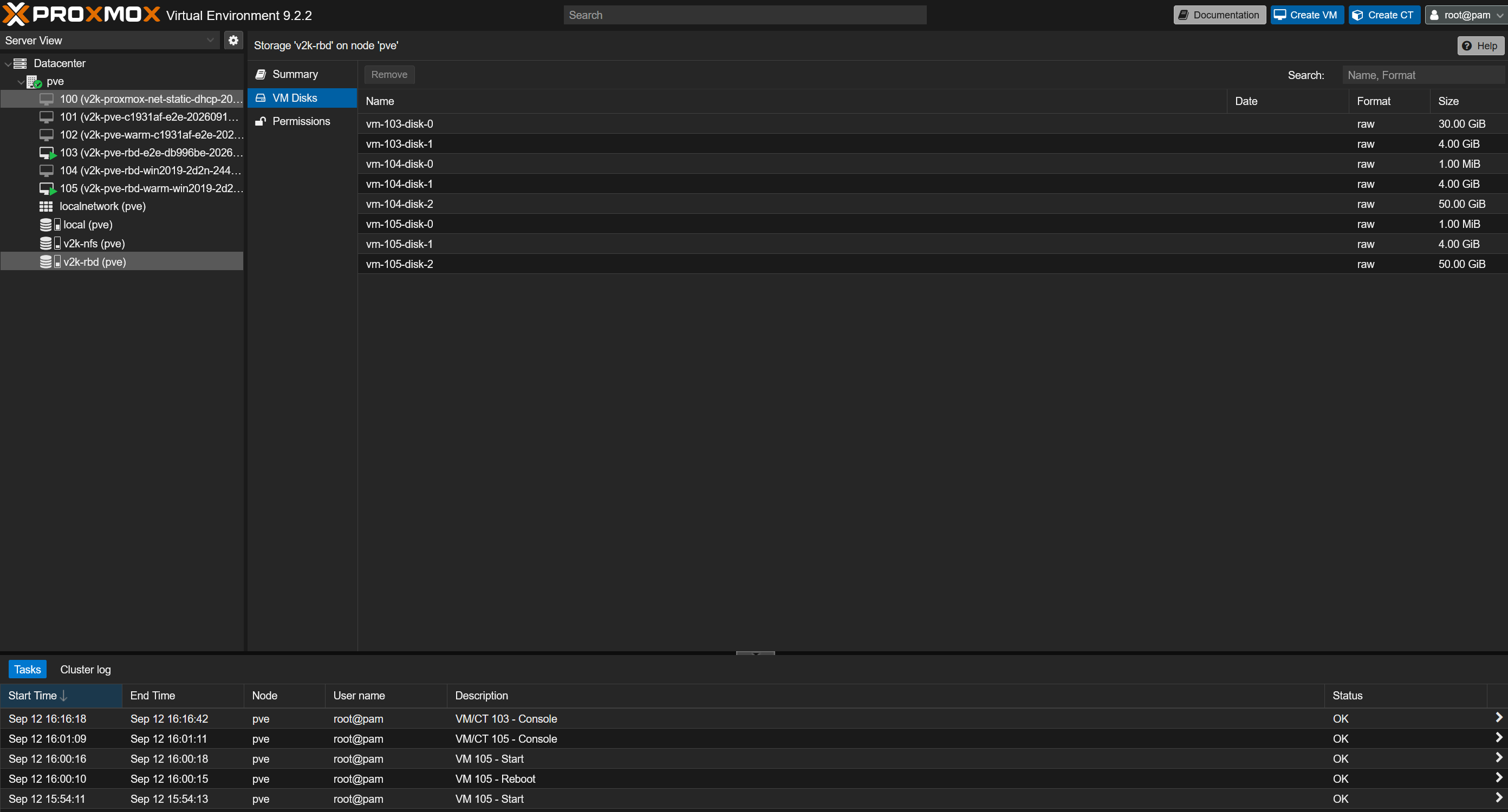
V2K builds complete Proxmox VMs through the API on NFS/QCOW2 and Ceph/RBD, with cold migration and controlled warm CBT flows implemented.
Development notes from V2K Migrate. New features, migration tests and the details behind them, from storage access to getting the guest running on KVM.
V2K builds complete Proxmox VMs through the API on NFS/QCOW2 and Ceph/RBD, with cold migration and controlled warm CBT flows implemented.
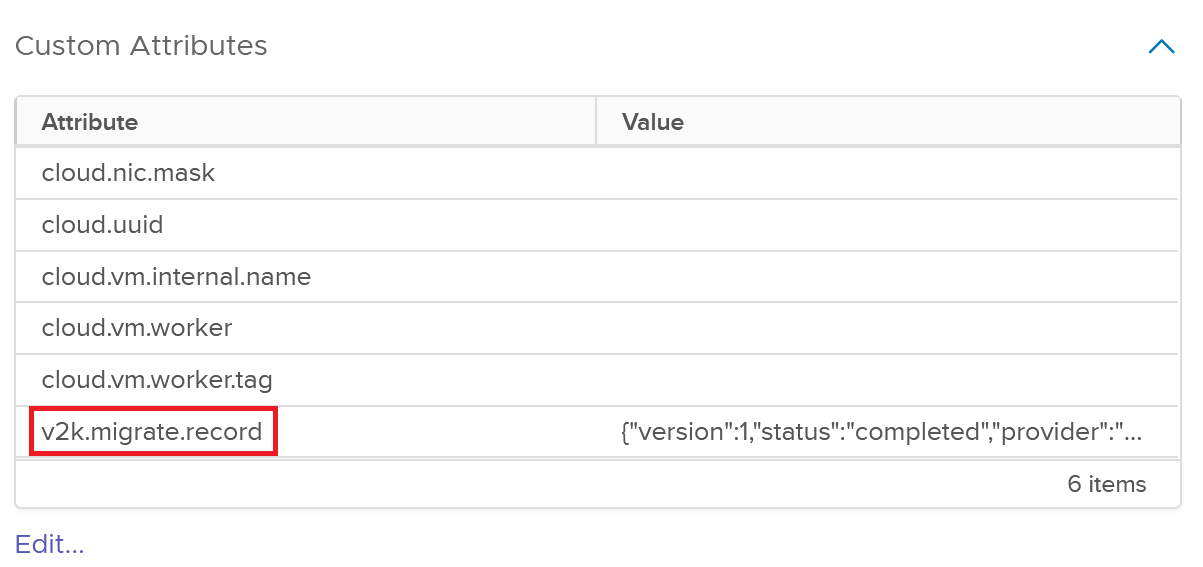
V2K Migrate keeps full migration history in PostgreSQL, but also stores a small recovery record against the source VM in vCenter. Here is what that record can rebuild, and what it cannot.
A Windows static IP is recorded inside the guest and in CloudStack. V2K Migrate has to keep both records in sync during migration.

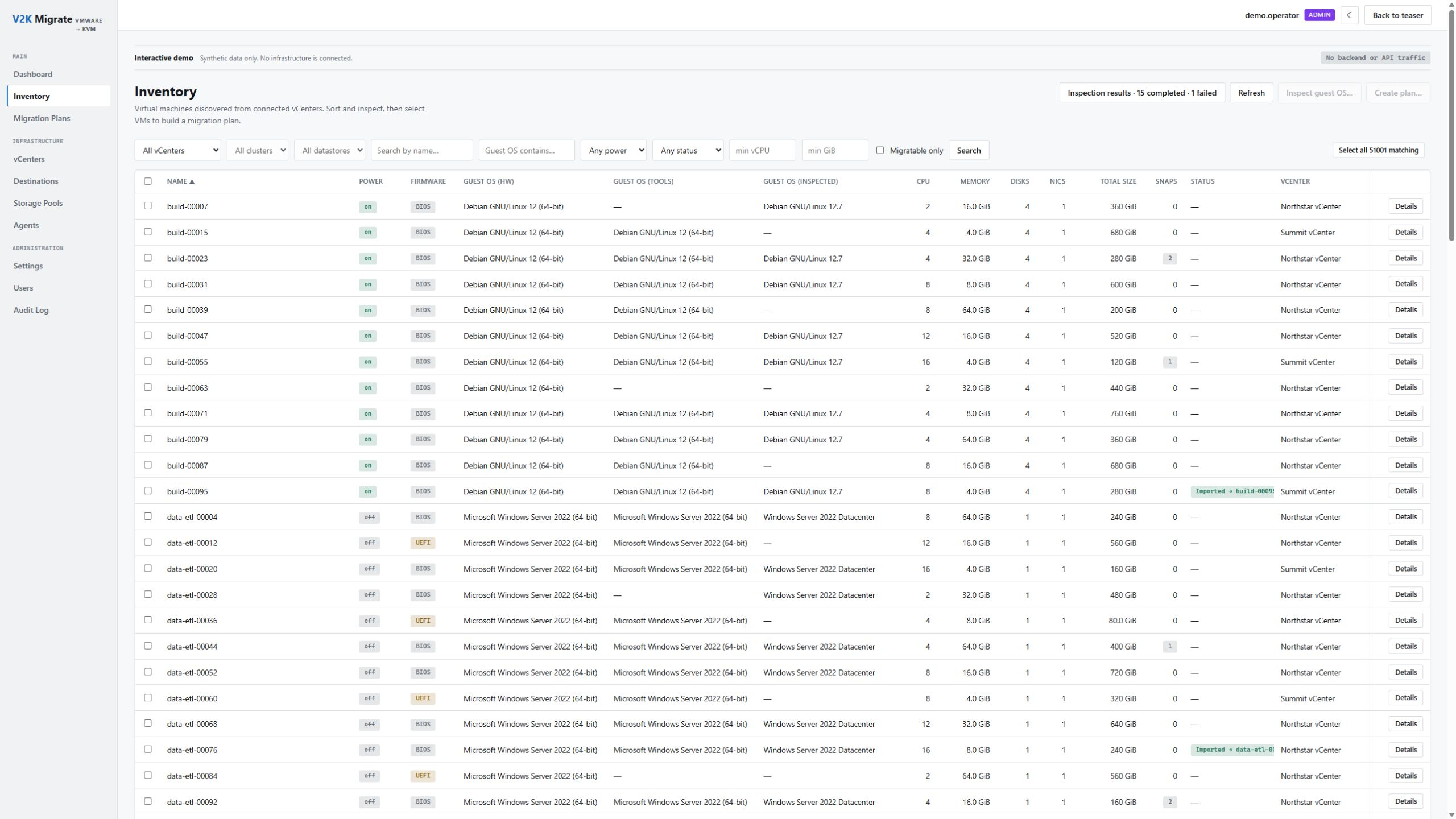
We tested the database, API and real UI with a large synthetic inventory. A PostgreSQL query reached 8.7 seconds. After the fix, its measured p95 was 183 ms.
Start here / Architecture
How V2K Migrate reads VMware disks, prepares the guest and creates the destination VM. The main design decisions, with their limits.
Release updates
Get launch and optional beta-testing updates. Sign up on v2kmigrate.com.
Get launch updates